

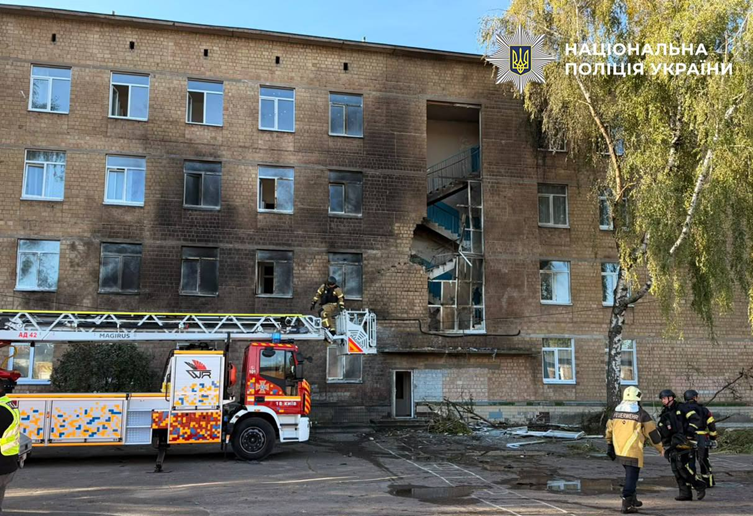
photo: Kyiv police
On the morning of October 1, Russia launched a drone attack on a school in the Solomyanskyi district of Kyiv. Pupils and teachers were in the shelter; there were no casualties.
This was reported by Mayor Vitali Klitschko, who also noted that a fire broke out after the strike.
After the air alarm sounded, 104 pupils and 60 teachers took shelter in the school, where classes continued. The strike damaged the facade of the school building at the third-floor level.
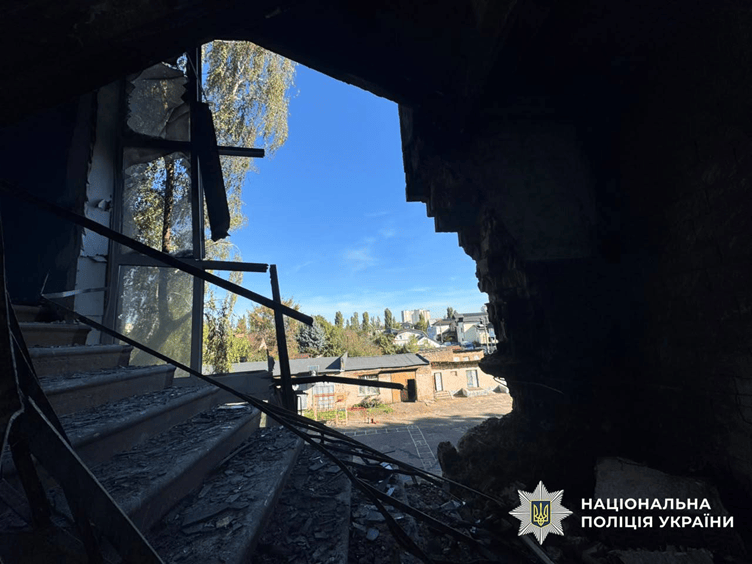
photo: Kyiv police
Rescue workers, medical personnel, police, and other relevant specialists responded to the scene. The fire was extinguished. After receiving clearance from emergency services, pupils and staff were evacuated, and the children were handed over to their parents.
The building will undergo an inspection to assess the damage. Just last year, the school was renovated after a blast wave from a nearby strike shattered its windows.
This is not the first attack on educational institutions in Kyiv. To date, 334 educational institutions have been damaged as a result of Russian attacks.
Yana Remez is a second-year student at V. I. Vernadsky Taurida National University.
Crimea remains one of the most painful topics in modern Ukraine. The peninsula has been under Russian occupation since 2014. However, during the years of occupation, Crimea has not become “Russian”—it has only become a place of systemic pressure, repression, and ongoing struggle.

As of today, the situation on the peninsula has clear measurable indicators: in 2024, 111 cases of illegal detentions, 173 arrests, and over 280 violations of the right to a fair trial were recorded in Crimea. In the same year, 109 interrogations and “preventive conversations” took place, which are used as a tool to intimidate the population. Since the beginning of the occupation, 473 politically persecuted persons have been documented, a significant part of whom are Crimean Tatars. Over the 12 years of occupation, Russia has imprisoned about 300 people on political charges, more than half of whom are representatives of the Crimean Tatar people.
These numbers are not just statistics. Behind each of them is a specific story: families who lost loved ones, people who ended up behind bars for their position, or those who simply disappeared. Human rights activists report that since 2014, at least 29 people have gone missing in Crimea, most of them Crimean Tatars. These are not just isolated cases. We are talking about a systemic practice—kidnapping, detention without contact with their families (the so-called incommunicado status), and pressure on loved ones to remain silent.
The indigenous people of Crimea – the Crimean Tatars – have become the main targets of repression. They are persecuted not only for their political views, but also for their religious beliefs. Despite this, they form the basis of non-violent resistance: they document crimes, support political prisoners, and work with international organizations. This is not just a fight for territory—it is a fight for the right to remain oneself.
In Crimea, it is not only dangerous to act—it is dangerous to speak. According to human rights activists, hundreds of people have been punished simply for their pro-Ukrainian stance or the use of Ukrainian symbols. The phrase “Crimea is Ukraine” can cost freedom there.
Despite total control, occupation does not mean final loss. There are three key factors that prove this assertion:
1. People have not changed their identity. Pro-Ukrainian sentiments remain, although they may not always manifest openly.
2. The world has not recognized the occupation. Crimea legally remains Ukrainian territory, and this stance is supported by international law.
3. Resistance continues daily. From the transfer of information to the preservation of culture, it is a silent but constant struggle.
Free Ukrainian Crimea is a fact that is still ahead. Today, Crimea is a territory without freedom. But at the same time, it is a territory of invincibility. And when they say that “free Ukrainian Crimea is a myth,” the facts prove the opposite. Because even under pressure, arrests, and fear, Crimea remains Ukrainian.
And this is no longer a slogan. This is a reality that is simply not yet complete.
Lyashenko Vladyslav is a student at the Journalism Department, pursuing the second (master’s) educational level at V.I. Vernadsky Tauria National University.
Crimea is a peninsula with a long and rich history. Its story goes far into the past. At the beginning of the second millennium, this land was home to native peoples — Crimean Tatars, Karaites, and Krymchaks. Today, Crimea is mostly known as a land occupied by Russia. This situation repeats earlier attempts to control and change the peninsula. But it was not always like this.
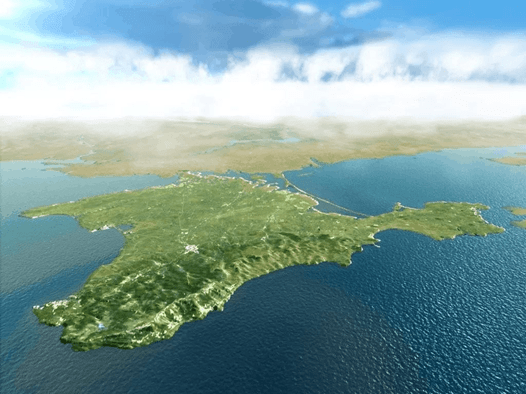
People lived in Crimea even before our era. Scientists found signs of Greek colonies there. This made Crimea an important place for trading. It has access to the Black Sea, which is good for the economy. At the same time, nearby regions often wanted to control Crimea because it was valuable.
An important time in Crimea’s history was the Crimean Khanate. It came after the Golden Horde. It was a large and strong state. It had a rich culture and good education. Because of its location, Crimea was a place where different cultures and religions met. Its capital, Bakhchisarai, was an important cultural and political center.
In 1475, the Crimean Khanate became dependent on the Ottoman Empire. This happened after the Ottomans took control of the southern coast of Crimea. During this time, local people had less freedom and became financially dependent by the Ottoman Empire.
Ottoman rule ended after the Russo-Turkish War in 1768. The Crimean Khanate was expected to become independent again. But firstly, the Russian Empire started to control its internal affairs. Then, in 1783, it annexed Crimea.
When Crimea was part of the Russian Empire, there was strong cultural and religious pressure. The authorities tried to change the people and make them follow Russian language, culture, and religion. Many native people were forced to leave their homes. They faced persecution and false accusations here.
Deportations also happened during the Soviet Union period. People were called “traitors” without real reasons. Many were sent to Central Asia. Many people died in the process.
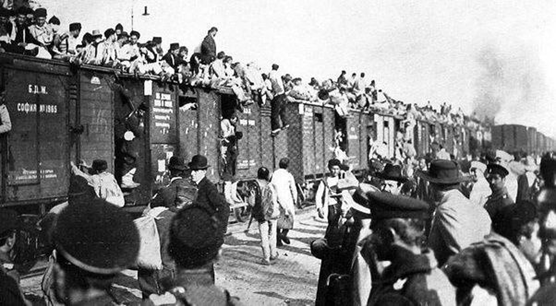
In 1954, Crimea became part of the Ukrainian Republic. This brought changes to the population and economy. Crimean Tatars slowly returned to their home. New economic projects were built here.
After Ukraine became independent, Crimea also started to develop. It became an autonomous republic. Native peoples got back some cultural and political rights. They rebuilt their religious and cultural life. Also, support from mainland Ukraine helped the economy grow here.
However, in 2014, Crimea was occupied by Russians. The annexation is not recognized by most countries. After this, native peoples again had to leave their homes. The Russian government moved new people into Crimea. This again pushed out local culture and religion.
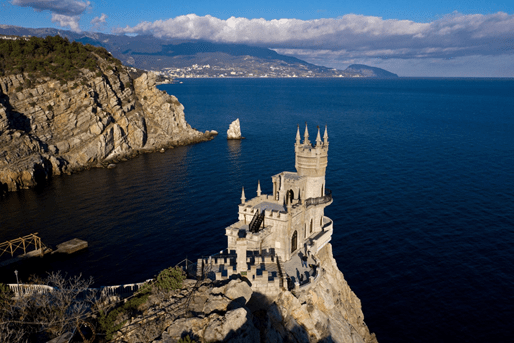
Today, Crimea is very important for Ukraine. The main goal is to return it. It is also important to help native peoples come back home and restore their rights and independence.
Iryna Yegorova is a first-year master’s student majoring in Journalism at V. I. Vernadsky Taurida National University.
Every year on March 14, Ukraine observes Ukrainian Volunteer Day—a special day, not just a holiday, but a tribute to people who voluntarily chose to defend their country.
This date was not chosen by chance: on March 14, 2014, the first volunteers left Maidan for the training base in Novi Petrivtsi, where they formed Ukraine’s first volunteer battalion to take part in combatting during the Anti-Terrorist Operation (ATO). The day was officially established in 2017 to honor the courage and dedication of Ukrainian volunteers who stood up to defend the country during difficult times.
Even today, volunteers remain an important force on the frontlines. Thanks to their courage, our country stays strong and withstands challenges. Across Ukraine, people mark this day by honoring volunteers, sharing stories of their bravery, and expressing gratitude for their service. Volunteer Day is not only a reminder of past deeds but also a sign of gratitude to those who continue to protect Ukraine today.
Kira Kipka is a second-year student in the Department of Journalism at V. I. Vernadskii Taurida National University. She studies journalism and is always looking for interesting stories to share with others. She loves languages and travel—they inspire her and help her create new ideas.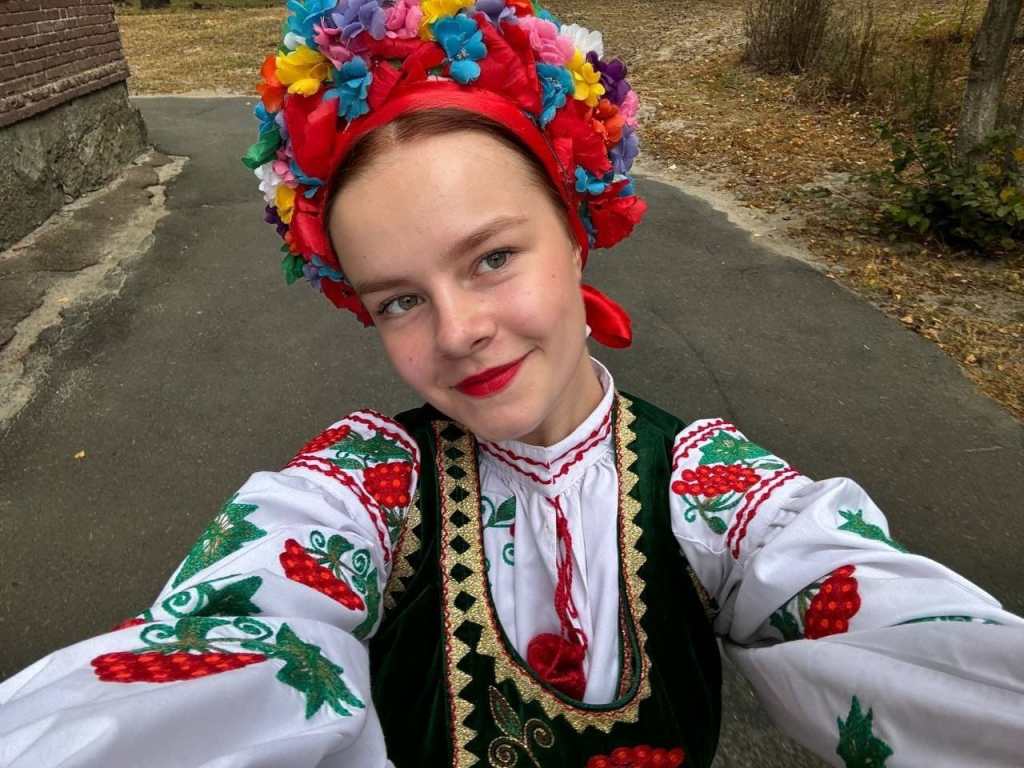
Every time a blackout occurs, we seem to find ourselves in a different reality—quiet, cold, and unfriendly. And it is in this darkness that we, Ukrainian students, have to continue our studies. Despite the lights out, weak internet, and broken relationships, we prove to ourselves and others every day: even in the most difficult conditions, you cannot stop.

The blackout taught us many things. The first is to appreciate light. What once seemed like a routine has now become a luxury. Studying during power outages has become more than just a challenge—it has become a test of our perseverance, strength of spirit, and faith in the future.

Online couples during blackouts are a different story. It is not always possible to get to classes on time; sometimes the connection is lost at the most important moments. In these moments, you feel as if you are cut off from the world—the darkness outside the window and the darkness inside the room merge into one. But even then we continue to fight for our studies.
After another shelling by Russia, the blackout schedules are intensifying again—there is less light. But despite this, we do not give up. We continue to adapt, look for alternatives, and stick to each other and our goal.
Each of us is looking for a way out, in our own way. Someone runs to the nearest cafe, where the generator is humming. Someone arranges consultations with teachers, sends work later, and makes up for topics at night when there is light. We study not only according to the university program—we learn to live in unpredictability and adapt quickly.
And when couples go in person, within the walls of the university, it becomes somehow easier. Even if there is no light there, the presence of people nearby is energizing. We can discuss tasks, joke, and get distracted. Togetherness makes us stronger.
We are tired, exhausted, and sometimes confused, but we still move forward. We are the generation that learns despite everything. We are the future of a country that has endured and continues to fight.
The blackout will not break us. It will only harden us. And when the light comes back on, we will not be just students—we will be young people who already know: even from the thickest darkness, a way out can be found.
A student of the Journalism Department at V.I. Vernadsky Taurida National University

In the modern war in Ukraine, which Russia began in 2014, one of the most horrific aspects is the forced removal, deportation, and “re-education” of Ukrainian children. This is not just a humanitarian tragedy but a war crime.
According to the Ukrainska Pravda media outlet, during 2025, Russia forcibly transported almost 11,000 Ukrainian children to 164 camps located in the territory of the Russian Federation and in occupied Crimea. This figure already exceeds the total number of children “re-educated” in the previous two years. Researchers indicate that the camps have clear coordination from the Russian government and direct support from the highest levels of power.
Russia officially does not admit guilt in the abduction of the children and rejects the accusations. In particular, Russian figure Medinsky, during negotiations in Istanbul, appealed to Ukraine: “Don’t put on a show for European grandmothers,” in response to the proposal to return the children.
“Children’s Catalog”: A Russian Tool for Digital Trade in Ukrainian Children
Russia does not shy away from any methods of “re-education” of Ukrainian children, so it is actively looking for guardians who could help with this. At the same time, for the comfortable illegal adoption of a kidnapped child, the Russians created catalogs with photos and descriptions of children from the temporarily occupied territories, where any Russian can choose a child based on appearance, eye color, hair, and temperament (for example, “obedient” or “calm”). Such conduct is a matter of considerable concern: such practices resemble digital advertising of children and call into question the possibility of identification and, in general, their protection.
Russian child abduction scenarios
The policy of kidnapping, deportation, and “re-education” of children is not just a random violation of human rights. It is a planned state mechanism that pursues the goal of Russification, the destruction of Ukrainian culture and language, and the breakdown of families and social ties—using force, deception, or intimidation.
The Commissioner of the President of Ukraine for Children’s Rights and Children’s Rehabilitation, Darya Gerasymchuk, emphasized that the Russians use the following scenarios to abduct Ukrainian children:
First they kill the parents, and then they take the children to their territory;
They take the children directly from the biological family;
Separate children from their families during so-called filtration measures;
create conditions in the occupied territories that are unsuitable for a child’s life, and then supposedly voluntarily offer parents to give their children away for so-called health improvement or rest, from which they are not returned home.
It is worth recalling that the Commissioner for Children’s Rights in Russia is Maria Lvova-Belova, for whom arrest warrants were issued together with Russian President Vladimir Putin on March 17, 2023. The International Criminal Court accuses the aforementioned individuals of war crimes, in particular, the abduction of Ukrainian children.
Kristina Chorba is currently a 2nd-year master’s student majoring in journalism. She is passionate about historical books. In her journalism, she raises social issues: children’s rights, domestic violence, and others.
The war in Ukraine has changed our lives in every way, especially in education.
Since the full-scale invasion, most schools and universities have switched to online learning. Lessons now often take place through video calls, where we study from our homes or shelters.
One of the hardest parts of studying during the war is dealing with air raids. When we hear the air-raid siren, we must immediately go to the shelter. Sometimes lessons are interrupted in the middle, and we join again later if it’s safe. Teachers are very understanding and try to support us emotionally as well as academically.
Despite all the difficulties, we continue to learn. We know that education is our future and our strength. Even when there is no electricity or internet, many students try to complete tasks using mobile data or even study with printed materials.

My name is Mariia Kazymirska. I am a student of the TNU named after V. I. Vernadskyi, group 014-U-21BZ, part-time form of study. I major in Secondary Education (014) with a specialization in Ukrainian Language, Literature, and World Literature. Despite the war and all its realities, I continue my education with dedication and hope for peace.
Education in wartime is not just about knowledge — it’s about resilience, hope, and belief in a better tomorrow.
Mariia Kazymirska
In the early hours of April 24, 2025, Russia launched another large-scale missile and drone attack on Ukraine, targeting multiple regions including the capital, Kyiv. The assault resulted in at least eight fatalities and over 70 injuries in Kyiv alone, marking one of the deadliest attacks on the city in recent months.

Picture: The map of the arial hazards targeting all of the regions of Ukraine monitored by ukrainealarm.com, 24.04.2025 at 00:47 am
The Ukrainian Air Force reported that Russian forces launched a total of 215 aerial weapons during the night, comprising 70 missiles and 145 drones. Among the missiles that Russia used to strike Kyiv were KN-23 ballistic missiles that originated from North Korea (in addition to Kalibr cruise missiles and Iranian-supplied Shahed-136 drones). The use of several KN-23s was confirmed by analysis of the wreckage, which Defense Express specialists learned from their own sources. In the Air Force’s compilation, these missiles are usually listed as similar to the Russian Iskander-M.
Ukrainian air defenses successfully intercepted 112 of these threats, here is the latest breakdown of the used arms and intercepted targets:
- out of 11 Iskander-M/KN-23 ballistic missiles 7 were shot down;
- out of 37 Kh-101 cruise missiles launched from Tu-95MS strategic bombers 31 were shot down;
- 6 Iskander-K cruise missiles, none of which were intercepted;
- 12 Kalibr cruise missiles 6 out of which were shot down;
- 4 Kh-59/Kh-69 guided aircraft missiles from tactical aircraft, all 4 were shot down
- 145 Shnahed strike UAVs/similar drones of various types, 64 were shot dow, another 68 were lost in location (without negative consequences), i.e. a total of 132 UAVs were neutralized.
- Despite these efforts, several missiles and drones penetrated the defenses, causing significant damage to residential areas and infrastructure.

Ballistic missile explodes in the sky over Kyiv, pictured by REUTERS / Gleb Garanich

Photo: REUTERS / Gleb Garanich
The attack led to widespread destruction in Kyiv, with fires breaking out in multiple districts. The total count of the injured civilians are still being estimated as rescue operations are ongoing throughout the day, with emergency services working tirelessly to locate and assist victims trapped under the rubble. Among the injured reportedly were six children, highlighting the indiscriminate and brutal nature of the assault.

The aftermath of the strike on Kyiv pictured by REUTERS / Valentyn Ogirenko

Photo by REUTERS / Ivan Antypenko
In response to the attack, Ukrainian President Volodymyr Zelenskyy announced he would cut short his official visit to South Africa to return to Ukraine. During his visit, he had been engaging in diplomatic discussions aimed at garnering international support for Ukraine’s defense efforts.
“Forty-four days since Ukraine agreed to a complete ceasefire and strikes. This was a proposal from the United States. Forty-four days since Russia continues to kill people and avoid significant pressure and responsibility for it. It is very important that everyone in the world sees and understands what is really happening. Approximately 70 missiles, including ballistic ones. Almost 150 more strike drones,” — Zelenskyy emphasized.
Commander-in-Chief of the Armed Forces of Ukraine Oleksandr Syrsky has also made a public statement accusing Russia of the unconcealed terrorizing of the civilian population: “The occupiers, suffering critical losses at the front and not having any strategic gains, are acting using terrorist methods – striking at civilian infrastructure, at our cities, killing women and children.“
According to Syrsky, the actions of the occupiers once again prove that the Russian Federation does not want peace. — “All its activities are the targeted killing of Ukrainians and the destruction of Ukraine,” — the commander-in-chief of the Armed Forces of Ukraine summed up.
This latest escalation underscores the ongoing volatility of the conflict and the urgent need for reinforced international support to bolster Ukraine’s air defense capabilities and protect its civilian population.

Photos: Suspilne News / Ivan Antipenko

Author credentials:
Mazchenko Hennadii
Since the beginning of the war on the territory of Ukraine, the Russian army has repeatedly proved its baseness and immorality in various acts. Killing civilians, hitting kindergartens, raping women, and looting houses have become common methods of waging war for Russian soldiers. Unfortunately, due to active hostilities, deterioration occurred in the environmental sphere as well.
Ukraine has faced massive climatic challenges since the beginning of the war. The destructive force of change is constant: fires, the emission of various gases, the destruction of infrastructure, and other direct and indirect effects. The main changes and the dangerous threat were explained by Anna Koryagina, an environmentalist and assistant of the communications department of the NGO “Ekodiya”, who gave an interview to the media “Focus”.
(«Фокус»)

(Photo: Anna Koryagina, from open sources)
According to the environmentalist, large-scale attacks on the Ukrainian power grid have led to many uncontrolled leaks of elegas, a greenhouse gas that is more harmful than carbon dioxide, methane, and nitrous oxide.
“The Russian war in Ukraine is also contributing to climate change by causing significant emissions of greenhouse gases. The total climate damage caused by the Russian Federation over two years of full-scale invasion of Ukraine is $32 billion. Such data emerge from the updated report of the Initiative for Accounting for Greenhouse Gases of War, the preparation of which involved scientists, experts, and also representatives of Ecodia,” says Koryagina.
In just 24 months since the invasion, emissions have risen to 175 million tons of carbon dioxide, far exceeding the annual emissions of an industrialized country like the Netherlands.

(Photo: representatives of Ukraine at the conference, from open sources)
We will remind that at the end of 2024, Ukraine had its own pavilion for the third time at the “COP29” conference –the largest and most influential international climate event of the year, which took place in Baku. The Ukrainian delegation noted that for almost 1,000 days of full-scale war, damage to the environment of Ukraine amounted to 65 billion euros. All elements of the ecosystem were affected by the Russian attacks: air, water, soil, forests, and protected areas. At COP29, Ukraine initiated the creation of a Global Platform for the development of international methods for assessing environmental damage from military actions.
Chorba Cristina is a first-year master’s student at the Department of Journalism of the Taurida National University.
The photo of Chorba Cristina: Open sources.
Materials describing the waves of migration of Ukrainians to countries in Europe and around the world appear more and more frequently on the Internet. Probably, residents of countries where waves of migration are taking place think about the desire to make money, laziness, and unwillingness to work. Of course, Ukrainians are different, but I do not rule out similar cases. But let’s take the percentage from Ukraine whose families have seen the war for two years already—families who have lost loved ones: husbands, brothers, fathers, mothers, sisters—those who simply don’t have the strength to fight anymore, but they tried to do everything they could in their power. They just need to leave their homes (if they still have homes) to try to start a new life in a new place.

Today, people died in Kupyansk because Russia fired missiles at the city. The church was destroyed, and the priest died. What will Russian propagandists say? There was a NATO base there, a military facility. Because it is in their habit.

(Artist Andriy Maghera)
Let’s look at the situation on the Ukrainian-Polish border, where trucks carrying humanitarian aid, medical equipment, grain, and food products are blocked. The Polish people, having the war practically at their side, do not understand the difficulty or the risk of the arrival of the Russian invading army, which kills, rapes, destroys, and robs. Moreover, the Polish protesters themselves openly say that the cost of their protest is 500 zlotys (the official currency of Poland) per day. Here is the tariff of the commonwealth with the people who save Europe from bloody carnage every day with their lives. Shame on the Polish people!

Kupyansk region
The next argument of shame became the well-known fact that Polish law enforcement officers detained journalist Mykhailo Tkach not far from the Polish-Belarusian border. The journalist filmed materials about the transit of products between Poland, Russia, and Belarus. I remind you: these countries are under a number of cruel sanctions. So the question arises: for whom and on whom do these sanctions apply, if they can be circumvented?

Where is the world community looking, and why do similar things take place in civilized Europe? Europe, which demands reforms from Ukraine and refuses admission to NATO, appeals to the need to comply with legislative mechanisms to meet the European level. So what is this level????
I would like to emphasize that Russia is an aggressor country that is not ready to accept agreements just to break them. Let’s remember that Russia has violated about 400 international treaties, one of which Ukraine is a party to. This has been happening since 2014 and is happening to this day; just look at the history. In particular, it is worth mentioning: the Budapest Memorandum, the Charter of the United Nations, a number of UN conventions, and the Helsinki Agreements.
Dr. Dosenko Anzhelika
Ph.D. of social communications, the head of the Journalism Department at V. I Vernadskiy Taurida National University. Internet researcher, soldier’s wife, mother… Still in Kiev.
In my opinion, the 2024 presidential election in Russia is an extremely important issue for the entire Ukrainian society. After Russia’s full-scale invasion of Ukraine on February 24, 2022, the two countries lost all relations with each other. The brutal war, numerous war crimes, and large-scale destruction caused by Russia have left a great mark on Ukraine’s history.

First, a large number of Ukrainians are very dubious and cautious about elections in Russia. The distrust itself is shaped not only by the war, but also by the long authoritarian rule, manipulation by the authorities, and even deadly blackmail. And, of course, this “method of governance” has been actively used during every election process in Russia. Many people are convinced that the election results were falsified, and the “prize” went to the person who organized the so-called “elections without choice” and forced people to choose his candidacy at gunpoint, and this person is Vladimir Putin.

Second, I believe that some Ukrainians viewed the elections as a certain, albeit unlikely, opportunity for a normal transformation of power and change within Russia itself. Some Ukrainians hoped that the Russian people would be motivated by the Ukrainian struggle against the authoritarian regime and would be able to seize the opportunity for democratic transformation. Unfortunately, the magic did not happen. And the small hopes of Ukrainians were not realized.
Third, I believe that most Ukrainians are convinced that elections alone will not be enough to bring about real change in the aggressor country. We need internal, democratic reforms in all spheres—political, economic, and ideological— as well as full public recognition and punishment of those responsible for this war against Ukraine. Only with such radical decisions can we hope for the transformation of Russia into a democratic country that thinks first and foremost about its people. But that is unlikely…
Thus, the attitude of Ukrainians towards the 2024 presidential elections in Russia can be characterized by deep distrust and their own confidence that these elections will not yield any results. Perhaps only through radical measures on the part of the Russian people can there be a small hope that something will change in this country. But this hope is unlikely to be realized.
Polana Rachkivka
Polana Rachkivka is a second-year student in the Journalism Department at V. I. Vernadsky Taurida National University.
The war in Ukraine has been going on for 10 years, from the beginning of the annexation of Crimea, Donetsk, and Luhansk in 2014 to the full-scale invasion in 2022. This time is very difficult for Ukrainians. The most important weapon we have is people, both military and civilian. The Russian information war is very clearly and quickly fighting against the spirit of the Ukrainian people. But the enemies turned out to be not only those who illegally encroach on the sovereign borders of the state.
Information Warfare and Its Impact On Ukrainians
For Ukrainians, the war has become a common topic for discussion. But one should pay attention only to what is happening on the battlefield. The most effective attack from the Russian Federation is an information war in the mass media. This war is waged using various methods, such as propaganda, cyberattacks, and disinformation. Modern man is chained to social networks, and despite bans on the use of Instagram, Tik Tok, Twitter, Facebook, and other networks in Russia, we can often see their users there. Of course, there would be nothing wrong with this if it were not for their propaganda. Russian users will always find a moment to publish a short post to undermine Ukrainians’ trust in the authorities. Russian propaganda is trying to demoralize Ukrainians by spreading fear, panic, and hopelessness. It is also used to justify aggression against Ukraine, creating its image as a hostile and dangerous state. Let’s take as an example what they write about the problems of Ukrainians and the deaths of civilians from Russian attacks. Allegedly, the Ukrainians provoke aggression, and the Russian Federation only destroys military facilities. But if you find reliable information about the loss of ordinary civilians in Ukraine, it shows that from February 24, 2022, to September 24, 2023, OHCHR recorded 9,701 dead and 17,748 wounded.
The War On the Borders of Ukraine and Why the Situation Is Becoming More Difficult
From 2014 to 2022, the Ukrainian people really demonstrated exemplary unity and compassion by providing massive aid to the territories occupied by the Russian Federation. Volunteers, activists, and ordinary people collected and handed over humanitarian aid, food, clothes, medicines, and children’s items. Ukrainian defenders defended the country’s freedom and sovereignty in Donbas at the cost of their lives. After 8 years of occupation of the three territories, a full-scale war began, due to which many Ukrainians left Ukraine. Of course, this hit the economy hard, and there were also not enough people to mobilize for the defense of the country. The first reason for Ukraine’s difficult situation in this war is the population. As of 2021, the country’s population was more than 43.79 million people, and the Russian Federation’s population was 143.4 million. This is where the first difficulty in Ukraine’s defense appears. The second difficulty arises from the fact that it is not possible to quickly find partners who are ready to help in this war. The key providers of military aid were the USA, Germany, Great Britain, the EU, and Norway, and the EU, the USA, Great Britain, Japan, and Norway were the key providers of financial aid. Turkey, Kazakhstan, Poland, and other countries also help with military equipment and monetary aid, but we should not close our eyes to the fact that countries such as Turkey and Kazakhstan also help the occupying country. And Poland, in its turn, not once, based on its own principles, closes its borders both for the supply of products and for ordinary people who want to cross the border. The situation on Ukraine’s borders remains tense. Russia continues to build up its military presence near Ukraine’s borders, drawing in troops, tanks, artillery, and other military equipment, giving it the opportunity to consider the occupation of larger territories.

Photo: Screenshot (Deep State)
“Brothers-countries”. Poland showed its friendliness to Ukrainians and how the USA “feeds” Ukraine with promises.

Photo: European truth
Considering the problems in the country, inequalities on the battlefield, of course the president of Ukraine expects help from allied countries. Poland helped a lot, from the start of the full-scale invasion until 2023. But from the beginning of 2024, Poland began to defend its interests and close its borders. There was a question about the ban on the transportation of grain and other Ukrainian products across Polish borders. They also raised the issue of assistance to Ukrainian refugees in Poland itself. Despite the worsening of relations between Poland and Ukraine, the Ukrainian people are grateful for the great and much-needed help at the beginning of the war. Poland is not the only country that shows its superiority over Ukraine. Back in 2023, the USA promised President Volodymyr Zelensky to provide assistance with F-16 aircraft. With these weapons, Ukraine would have taken control of the situation in the occupied territories and would have been able to improve the state of the borders.

Photo: Militarnyi
On February 17, 2024, the United States planned to train 12 Ukrainian F-16 pilots in the current fiscal year. This was reported by the publication Air & Space Forces with reference to a representative of the Air Force of the US National Guard.
Eight of those pilots are currently in training, with four more scheduled to be trained by the end of FY2024.
“It’s a very standardized training program that involves many countries, including the United States, who are trained here in the United States, and the English language training that precedes the tactical training,” a US defense official said. At the moment, the situation remains stable, Ukrainian pilots are still being trained to fly the F-16, and the transfer of aid is generally postponed until the summer. Ukraine really depends not only on the help of foreign partners, but also on its own stability, unity, and will to win. Without the unity and joint efforts of Ukrainians, the war can be lost. Ukrainians have already demonstrated incredible resilience and fortitude in the face of brutal aggression. This unity and steadfastness are key factors in confronting the enemy. The unity and activity of Ukrainians at the front and in the rear significantly increase the effectiveness of any help from outside. History shows that many nations have won victory over a stronger enemy through unity and self-sacrifice. Even a small but united group of people can do much more than a scattered crowd. Let us remember that the strength of Ukraine lies in the unity of its people! Together, we will be able to defeat any enemy, protect our land, and build a happy future for Ukraine. We believe in Ukraine! We believe in the Armed Forces! We believe in our victory!
Secretova Anastasia
is a first-year student in the Journalism Department at V. I. Vernadsky Taurida National University.
This is an article about the sketches of a soldier about how cities in the Donetsk region defended themselves: Zaitseve and Horlivka.
Dolar, also known as Bucks, formerly a simple soldier and now a senior sergeant, told the story about loyal comrades Lyokha, Til, and Kolya, as well as the attack on Horlivka, where the Russians took cover with a gas pipe.
2018 year. Zaitseve Donetsk region.

“Til and Lyokha”. Photo author: Military Armed Forces.

Photo author: the Armed Forces of Ukraine.
I took him (a dog nicknamed Lyokha) to fight with me in Zaitsevo when he was only a puppy of three months. I returned from the war, but he didn’t. He was still adjusting to the explosions. And Colin is a dog, Til… He was ready for anything, but as soon as they started shooting, he got very scared and started to run away.
And how I lost my Lyokha. Two months later, the police brought him to my home in Zaitsev. I didn’t even know about it. I was in mortars. The house next to us was completely filled with mines to the ceiling. And if they got there, they would kill us all. And that puppy she got from Kolya, Lyokha’s friend, was red-haired and had a short tail…
Lyokha was better. He rushed into battle. He always went ahead of us. But as soon as the fight began, the dog began to have hysterics. He was scared, and he ran away as soon as he heard the click of the shutter. Lyokha already knew that this sound would do no good.
2018 year. Gorlovka Donetsk region.
My first fight. In 2018, our task was to maintain our position. We were constantly stormed by divergence. She covered herself with a gas pipe. It was impossible to shoot at it or even in its direction, because if you shoot there, then the whole of Horlivka will run out of gas. They shoot at us, and we can open fire only with small arms —automatic weapons, machine guns— and nothing else. They buried their positions right under the gas pipes. Specially.
And you know how scary it was when I came under fire for the first time… They hit me with machine guns, my Sich. It was 650 meters away from 0. Our task was to meet the DRG (sabotage-reconnaissance group). I was 20 years old then. When they fired machine guns with a thermal imager, I was praying to God. Simply raising your head results in instant death. And you understand that if it touches your head even a little bit, that’s all… You’ve been killed.
Yarik was then killed. He was 19 years old. The old man, Khoma, blew himself up on a mine. We shared one suhpai (meals for military). Everything was shared! Even when Svarshchik fell into an oak landing, when we left Sichi, there was a rotation, and we were hit with machine guns from three sides. You have no idea what it’s like to be shot at by machine guns from three sides when trees break and fall in front of you. How scary it was. And when you run, you get short of breath. When such a state occurs in your soul that you just want to save yourself, you just fall into a pit. But there is Svarshchik, Vladik… He is absolutely not my friend. He says, “That’s it; I’m not going anywhere! Leave me!” And you approach him and shout, “Go! Because I will shoot you right here! We have to get out of here! Otherwise, we will lie down here with you.” And everything is tearing around you… The earth is torn apart. You know that there is a hole 30 meters away that you can jump into to catch your breath. However, you still have to drag the welder along with you. You’re wearing a bulletproof vest, a helmet, and a machine gun. You leave Sichi, which is under fire from machine gunners and snipers.
They didn’t touch us at first, but as soon as we changed. All of us were children aged 19–20 who wanted to play cards with their friends in the evening. And here, you have to kill. And when they come after you, they understand that Sarshchik abandoned you. He ran away. He does not know what to do, because he could not shoot a living person. And they all go with white armbands. How terrible it is to shoot a person at the age of 20! And you understand: if you don’t shoot him, he will shoot you. He will not spare you…
After that, it was no longer scary to kill. You understand that it should be this way.
Our hell has been here for 10 years already… It got stronger, but we are still here…
Elizaveta Khalupenko
The war in Ukraine has terrible consequences not only for Europe but also for the world. Every day, hundreds of chemicals are released into the atmosphere, which destroy nature and poison fresh water supplies when they get into the soil. Recently, Vladimir Putin began to threaten with nuclear weapons. I don’t think it’s worth detailing the consequences of a nuclear attack on Europe and Russia itself, but the Russians don’t care; they’re used to dying for nothing, but I’m sure that European citizens don’t want to die for Putin’s ambitions.
Therefore, now it is worth paying attention not only to the economic and historical plans of this war but also to the ecological one, which is reflected on the entire planet. Recently, I have been very interested in the whereabouts of our eco-activists, such as Greta Thumberg, who does not make calls to save the planet from a nuclear disaster, or where the eco-activists were when the Russian Federation blew up one of the largest water reservoirs in Ukraine, the Kakhovka Hydro-electric Station. On June 6, 2023, at 2:30 a.m., Russian troops blew up the Kakhovskaya HPP, which was mined by them at the end of February 2022. This act of terrorism disrupted the ecosystems of Ukraine and thereby caused unique consequences.

As the “Ukrainian Environmental Protection Group” notes, “Kakhov reservoir is the second largest reservoir in Ukraine (area: 2155 km²) and the first in terms of water volume (water volume: 18.19 km³), located in three regions of Ukraine (Zaporizka, Dnipropetrovsk, and Kherson), and has a length of 240 km. The water level of the Dnipro River was raised by 16 m with the construction of a hydroelectric station almost 4 km long. Therefore, the negative consequences of this terrorist act for wildlife will be manifested in an area of at least 5,000 km² (flooding zone and drainage zone). Only the area that has been covered by the waters of the reservoir for the last 68 years and is now exposed to the sky for at least years will be larger than 1000 km²!

Kakhov reservoir contained huge stocks of freshwater fish, which Ukraine lost: at the time of the terrorist attack, there were no less than 43 species of fish. The birds, along with the fish, will disappear. Important was the bird nesting process on the mounds in the reservoir’s center, which until now were isolated islands and can now get direct land access from predators and people. This also led to an eco-government. The impact on plant life after flooding is just as colossal. As a result of a catastrophic decrease in the water level in the reservoir, aquatic and coastal aquatic plants in the Kahovsky Reservoir will disappear.

Moreover, above the dam of the Kakhovskaya HPP, as a result of drainage, a number of nature conservation areas will also be affected, including at least 11 objects of the nature reserve fund. Here they are listed by ecologists and historians: Kamianska Sich (12,261.14 hectares); Velikiy Lug (16,756 hectares); Panay Regional Landscape Park; Cairo beam (664.9 hectares); Mai Gora tract (68.0 hectares); Kamensky forest massif; Ivanivsky Bir; Vodyansk kuchuguri; Stoyany (15 ha); Malokakhovsky Bir (177 ha); Park-monument of horticultural art: Arboretum of Kakhovsky forest farm (15 hectares).

Moreover, the territory that was flooded in whole or in part includes nine sites of the Emerald Network of Europe, created by the decisions of the Council of Europe from 2009 to 2020, which led to economic consequences. The loss of the natural features of these territories endangers Ukraine’s fulfillment of its obligations to preserve these territories for the whole of Europe, which is in the hands of the Russian Federation, in order to discredit Ukraine.
At the same time, we should not forget about the desalination of the Black Sea. The release of a large amount of fresh water changes the structure of the water in certain areas of the Black Sea and will lead to the following consequences: the extinction of fish and an increase in the number of jellyfish.
Blowing up the Kakhovka Hydroelectric Station is a terrorist attack not only against Ukraine or the European Union (EU), but a crime against humanity and our descendants. But… Russia has committed similar crimes more than once (for example, blowing up the Chernobyl Nuclear Power Plant and concealing information about it). But we will raise this topic in our future posts.
Dr. Dosenko Anzhelika
Ph.D. of social communications, the head of the Journalism Department at V. I Vernadskiy Taurida National University.

Every third Thursday of May is Embroidery Day, a special holiday for Ukrainians
Embroidery is a talisman, a symbol, a desire for freedom and love for the Motherland.
An embroidered shirt is a national garment that is in every Ukrainian’s closet, but you don’t need a special occasion to wear it. To kindergarten or school, to work or for a walk: you can honor your national identity every day. But it is on this holiday that you can see people wearing embroidered clothes on the streets, and on this day Ukrainians remember the rich history and culture of our nation, its unity and resilience.

Фото: uu.edu.ua

The history of Ukrainian embroidery is closely linked to the history of the Ukrainian people, their traditions, beliefs and goals. Each region of Ukraine has its own unique patterns that have been passed down through the centuries. Embroidery is a priceless treasure that we must protect and honor.
In recent years, Embroidery Day has taken on a different meaning, a deeper meaning brought on by the bloody war. Ukrainians who have fled their homes and are abroad also express their unity and patriotism by wearing embroidered shirts. Far from their homeland, Ukrainians do not forget about their traditions. While embroidered shirts used to be commonly seen in Ukrainian cities, from bustling Kyiv to small Kaniv, people wearing embroidered clothing can now be found walking the streets of Wroclaw, Munich, and other cities.
Ukrainians demonstrate their resilience and strong spirit every day, and Embroidery Day is another day when we remember who we are, where we come from, and where we are going.
Hluhovtsova Alina is a student in the Journalism Department at V. I. Vernadsky Taurida National University.

The war made significant changes in all spheres of Ukrainian life, and education was no exception. Despite the shelling and other challenges, teachers and students of education show incredible resilience and desire for knowledge.

Since the beginning of the full-scale invasion, the educational process in Ukraine has undergone radical changes. Many schools were damaged or completely destroyed, and millions of children ended up abroad. However, teachers quickly adapted to the new conditions and transferred training to an online format.

Shelling of schools, lack of shelters, mining of territories—all this poses a threat to the life and health of students and teachers. With the transfer of schools and universities to the online mode, unfortunately, not all children have access to the Internet and the necessary equipment for this study.
At the same time, the war revealed positive aspects. Ukrainian society has united to support education. Many volunteers help schools with equipment, textbooks, and psychological support. The war accelerated the development of distance learning and other innovative educational technologies.
Despite all the difficulties, Ukrainian education continues to function. Teachers and students make every effort to gain quality knowledge and maintain a spiritual connection with Ukraine.
Education is an investment in the future. And Ukrainians prove that even in the most difficult conditions, they are ready to fight for their right to education and build a new, better Ukraine.
Secretova Anastasia
is a second-year student in the Journalism Department at V. I. Vernadsky Taurida National University.
Photo Credit
Photo credit for all photos: Koshovenko Tvua.
Emotional burnout and fatigue are a constant companion of Ukrainians during the war. People face a stream of disturbing news, losses, and fear for their own lives and those of their loved ones.
It is important to realize that emotional burnout is not a weakness but a natural reaction to extreme circumstances.
It is a scientifically proven fact that a person who is constantly in danger subconsciously develops a feeling of anxiety, which is always with him. People try to be ready for any circumstances and plan actions in case of danger, but over time the body loses the ability to effectively cope with the load.

It affects various aspects of life: psychological state, physical health, relationships with loved ones, and ability to work.
Military personnel, volunteers, displaced persons, people in the rear—all face this problem.
Military personnel need special psychological support. Because every minute they risk their lives. Especially, they perceive the loss of their brothers painfully. It is our duty to support the soldiers. They do everything to keep us alive.
In the conditions of war, it is extremely important to take care of your emotional and physical health, because only by maintaining inner strength can you effectively help others and continue your struggle.
Re-energizing and taking care of yourself is not a weakness but rather a foundation for long-term resilience. The better you support yourself, the more strength you will have to help loved ones and contribute to the overall victory.
Sapel Anastasiia
is a third-year student in the Journalism Department at V. I. Vernadsky Taurida National University.